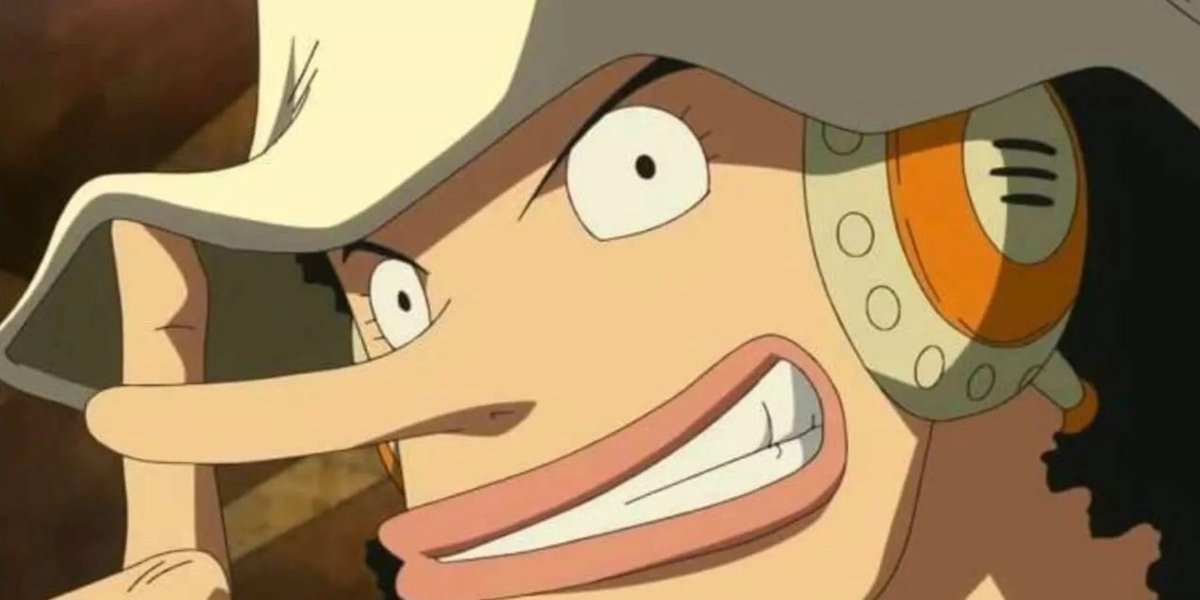
The internet is a fascinating place, isn't it? Sometimes, a simple search query can spark an entire conversation, merging beloved universes in unexpected ways. The idea of "Usopp in Blue Lock" immediately captures attention, bringing to mind the resourceful, often timid, but ultimately brave sniper from One Piece finding himself thrust into the cutthroat, ego-driven world of Blue Lock. It's a fun thought experiment, a testament to the power of imagination and the appeal of seeing how diverse character archetypes might fare under extreme pressure.
However, let's set the record straight: Usopp, the long-nosed sharpshooter and storyteller of the Straw Hat Pirates, is not a character in Blue Lock. He belongs firmly in the realm of One Piece, adventuring across the Grand Line with Monkey D. Luffy. The Blue Lock project, on the other hand, is a fictional Japanese football (soccer) training program specifically designed to forge the world's greatest striker.
While Usopp himself won't be dribbling down the field in the Blue Lock facility, the very premise of asking "What if Usopp was in Blue Lock?" speaks to a deeper fascination. It highlights our curiosity about how different personalities, skill sets, and psychological profiles — even those seemingly ill-suited — might evolve in a hyper-competitive, high-stakes environment. And that, fundamentally, is what Blue Lock is all about: the dramatic transformation of young Japanese strikers. Let's dive into the true nature of this groundbreaking project and the unique individuals it aims to cultivate.
Decoding the Blue Lock Project: A Battle Royale for Striking Genius
Blue Lock is Japan's radical, no-holds-barred answer to its footballing woes after a disappointing 16th-place finish at the 2018 FIFA World Cup. Spearheaded by the enigmatic and brilliant football genius, Jinpachi Ego, the project's singular, audacious goal is to create the world's most egotistical, unstoppable striker—a player capable of single-handedly leading Japan to World Cup glory. This isn't your average football camp; it's a revolutionary experiment designed to shatter conventional notions of teamwork and nurture pure, unadulterated individual talent.
To truly grasp the origins and objectives of this ambitious program, you'll want to read more about What Is The Blue Lock Project. It details the vision that drives this extraordinary facility.
Jinpachi Ego's Unconventional Philosophy: Ego Above All
At the core of Blue Lock lies Jinpachi Ego's controversial philosophy: that Japan's previous failures stemmed from a lack of truly selfish, "ego-driven" strikers. He believes that by confining 300 of Japan's most promising young strikers in a specialized facility, he can strip away traditional notions of collaboration and force them to confront their own weaknesses, unleash their inherent strengths, and ultimately balance their individualism with strategic cooperation—all in pursuit of becoming the number one striker. This intense "battle royale" style elimination program is brutal by design, pushing players to their absolute psychological and physical limits. For a deep dive into the mindset driving this unique facility, explore Understanding the Core Philosophy of Blue Lock.
The Structure of Blue Lock: Elimination, Evolution, and the Next Stage
The Blue Lock facility itself is a complex ecosystem of challenges, rankings, and eliminations. Players are constantly evaluated, forced into new teams, and pitted against each other in high-pressure matches. This environment is less about comfortable development and more about forging diamonds under immense pressure. Those who fail to adapt, to evolve, and to demonstrate their unique "ego" are swiftly eliminated, their World Cup dreams shattered. The project even has a planned "second installment in 2026," signifying its long-term, evolving nature. If you're curious about the rigorous stages and how players navigate this brutal system, take a look at The Blueprint of Blue Lock: Rules, Stages, and Evolution.
Mastering the Flow State: Jinpachi Ego's Ultimate Weapon
Integral to achieving "superhuman" performance within Blue Lock is the concept of the "flow state." Often referred to as being "locked in" or "in the zone," this is a mental condition where individuals are completely immersed in an activity. Pioneered by Hungarian-American psychologist Mihaly Csikszentmihalyi, the flow state offers immediate gratification, a warping of temporal experience, and heightened effortless attention. It's the moment when everything else fades away, and only the game, the ball, and your objective exist. To understand the full scope of this critical mental state and why Ego champions it, immerse yourself in The Power of the Flow State: Jinpachi Ego's Secret Weapon.
The Science Behind Being "Locked In"
When players enter the flow state, they exhibit several key characteristics:
- Autotelic Experience: The activity itself becomes inherently rewarding, a joy in its purest form.
- Warping of Temporal Experience: Time seems to speed up or slow down, losing its conventional meaning.
- Loss of Contemplative Self-Consciousness: Self-awareness fades, allowing for pure, uninhibited action.
- Effortless Attention on the Present Moment: Focus becomes absolute and unstrained.
- Agency Over Self: A profound sense of control over one's actions and the environment.
- Integration of Action and Awareness: Mind and body work in seamless, perfect unity.
Achieving this state isn't random; it requires a cognitively challenging task that is optimally balanced—neither overwhelmingly difficult nor underwhelmingly easy. An individual's temperament and intrinsic drive also play crucial roles. For a detailed breakdown of the psychological principles and the optimal conditions required, check out The Science Behind the Flow State and Its Role in Blue Lock.
Ego's Interpretation: Beyond Mindless Indulgence
Jinpachi Ego views the flow state as a trance-like condition where players are fully absorbed in the game, achieving crucial mind-body synchronization. He asserts that when players are presented with sufficiently challenging tasks, they can tap into dormant potential. Ego explicitly ties mastery of flow to one's ego, emphasizing that players must actively resist "mindless indulgence" in passive forms of entertainment to achieve true footballing genius. By overcoming such distractions and achieving complete synchronization, players can transcend their limitations and perform at optimal levels. To grasp Jinpachi Ego's specific, demanding vision for achieving this state, don't miss Jinpachi Ego's Vision: The Philosophy Behind Blue Lock.
Blue Lock's True Strikers: The Egotists Who Achieve Flow
While Usopp remains a fascinating "what if" in this context, Blue Lock showcases its own unique character archetypes—players who embody Ego's philosophy and demonstrate the power of the flow state:
- Bachira Meguru: An early example, Bachira unintentionally entered flow during the First Selection, executing a "triple nutmeg" that effortlessly bypassed the opposition's defense, a pure expression of joyful, intuitive play.
- Nagi Seishiro: Initially a lazy genius, Nagi achieved flow during a high-pressure game against Rin's Team Red, scoring a miraculous "2-stage fake volley shot." His evolution continued in the Neo Egoist League Arc, where he scored a "five-shot revolver fake volley," a "goal of the century" only possible through complete immersion in flow.
- Isagi Yoichi, Gagamaru, and Rin Itoshi: These and other talents within the project have consistently exhibited glimpses of greatness, utilizing and striving to master the flow state to elevate their game dramatically.
The conscious mastery of the flow state is portrayed as an essential tool for these aspiring "egoist" strikers, enabling them to surpass their existing skills and perform at a superhuman level. To meet the genuine talents who embody Blue Lock's ideals and consistently push their limits, delve into Exploring Blue Lock's Most Egotistical Strikers.
Blue Lock's Echo in Reality: A World Cup Phenomenon?
The radical individualism preached by Jinpachi Ego and the intense competitive environment of Blue Lock garnered significant real-world speculation, particularly after Japan's surprising performance in the 2022 FIFA World Cup. Victories against football giants Germany and Spain sparked conversations about whether the fictional project's emphasis on individual ego might, in some abstract way, reflect a burgeoning mentality in Japanese football. While purely speculative, it highlights the story's compelling impact on cultural discourse. To understand how this fictional project has sparked real-world discussion and inspired a nation's football aspirations, uncover Blue Lock and the Real-World Impact on Japanese Football.
While the idea of Usopp from One Piece joining the Blue Lock project remains a fun, hypothetical crossover, the actual world of Blue Lock offers a rich, deep exploration of character, psychology, and the relentless pursuit of footballing greatness. It's a series that challenges conventional wisdom and pushes its characters to redefine what it means to be a striker. The journey of these young players—their struggles, their breakthroughs, and their mastery of concepts like the flow state—is a testament to the power of self-belief and raw, individual ego. As the project continues to unfold, both in its narrative and potentially in real-world influence, Blue Lock stands as a powerful narrative about evolution, competition, and the relentless drive to be the best.